
In the last decade athletes have increasingly launched production companies to control the narrative surrounding them and tap into a growing asset class. Reflecting on these endeavors, what are the keys to success for athlete-owned production companies?
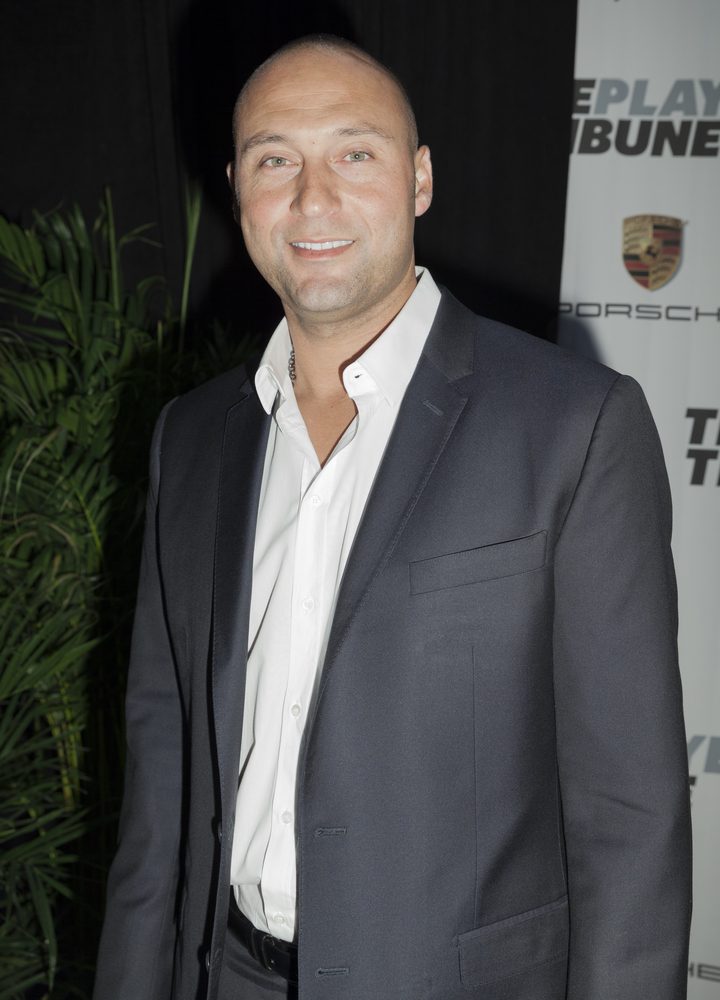
Derek Jeter’s 2014 founding of The Players’ Tribune shifted the balance of power in sports journalism. Prior to the platform’s founding, athletes relied on journalists to share their stories across popular press and mainstream media outlets. This practice meant that words could be shifted and context ignored. Resultantly, Jeter–and many other athletes–often censored what they shared with the media. Yet, with social media then still a developing technology, for athletes to reach wide audiences engagement with and reliance on traditional media was required.
The Players’ Tribune turned this practice on its head by allowing for athletes to publish first-person essays on a widely viewed digital platform. In turn, athletes began sharing raw emotion and personal details with fans through their Players’ Tribune pieces. This practice effectively removed the proverbial fourth wall–the space between actors and the audience, or in this case athletes and fans–by giving fans a front row seat to athletes’ inner mindset and experiences.
Since The Players’ Tribune’s founding, other leading athletes have launched successful media platforms and production companies. Founded in 2014 with its media platform launching in 2015, LeBron James created Uninterrupted to allow athletes “to tell their stories in the most candid way possible with no interruptions and straight from the heart.” Launched as a series of uninterrupted conversations, James would go on to co-found the SpringHill Company, which has produced documentaries, podcasts and television content.
Jeter and James’ ventures helped open up a new asset class for athletes: production companies. Broadly stated, a production company is a business that creates visual or audio content. This content can be in the form of a podcast, film, television show or digital series. In some instances production companies distribute their own content. Other times they sell their content to or partner with distribution companies to bring the content to viewers. A key benefit in owning a production company is the right to “green light”–or approve–what content the company creates. Thus, by launching or investing in production companies, athletes call the shots on what stories are told.
The elements involved in operating a production company make athletes natural fits for the role. At their core, production companies exist to create intellectual property. From a media standpoint, intellectual property includes all of the unique creative or distinct brand elements existing in a piece of content. These elements range from the script and characters to music and final production. In traditional scripted film and television, writers spend extensive time developing characters’ narratives and personas, which were then acted out, filmed and woven into a final production. The unique lives of athletes–from how they prepare for major moments in the season to what they do outside of the game–create countless story arcs that can be turned into unscripted or scripted content. Further, because athletes have long-established and loyal fan bases, the effort to get audience buy-in or interest into their “characters” is less of an upswing than that involved in creating a character from scratch. Thus, the intellectual property production capability of athletes makes them attractive production company owners or investors.
Top athletes are increasingly aware of their intellectual property potential and are resultantly more frequently launching or investing in production companies. An October 2025 study from the University of Southern California identified 33 athlete-owned production companies. The production companies of athletes ranging from Serena Williams, Tom Brady, Stephen Curry and more have produced over 370 media properties. Some athlete-owned production companies have also reached significant valuations. In 2021 James sold his minority stake in The SpringHill Company at a $725 million valuation. In 2025 a ten-percent stake of Peyton Manning’s Omaha Productions was sold, which valued the company at $750 million.
Despite these results, some industry leaders encourage athletes to hit the brakes before launching a production company.
At the 2026 Milken Institute Global Conference, Paramount’s president of Sports Entertainment, Jesse Sisgold, discussed the keys to success for athlete-owned production companies.
“For me it’s about whether there is a true desire [of the athlete] and if they are willing to commit and are trusting enough to be an awesome partner on the ground,” Sisgold said. “When all those things come together, we have tremendous success.”
To be an engaged partner, Sisgold notes that the production company needs to be the athlete’s primary focus–as opposed to their playing career.
“The problem we’ve had is that [the production company] is not the primary focus when they’re still playing,” Sisgold said. “A lot of our broader partnerships lean into athletes who are looking for their next chapter, and have a true natural interest in storytelling or the broader media landscape. There, we collectively thrive. But we have definitely had less successful endeavors when we’ve jumped in with a very big, exciting name who loves movies but is not really focused on this. There are a lot of those failures.”
Said failures may be leading traditional studio companies to pull back investments and partnerships in athlete-owned production companies.
“A close colleague who runs one of these said that five years ago he had every athlete driven production company in a deck to showcase why they were worth ‘x’,” Sisgold said. “This year, he took all of that out and tried to distinguish why they are not a traditional athlete driven production company for valuation purposes, because there’s a bit of stigma around it now.”
Sisgold’s warning outlines the keys to success for athlete-owned production companies:
1. Athletes must recognize their unique intellectual property creation value. Every athlete has a story to tell. To distinguish themself from the wider athlete marketplace, though, athletes should identify a genre or area of content that they are uniquely positioned to curate. A great example of this is Stephen Curry. Curry is arguably one of the greatest basketball players of all-time. But so is LeBron James. Both could focus their entire slate of content on basketball-related stories. Doing so would make them direct competitors, and thus, eat into their companies’ revenues. Thus, along with producing basketball-related content, Curry’s Unanimous Media has developed content centered around another of his passions–golf. This is a lane that distinguishes his company from James’.
2. Athletes must be all-in for the endeavor. Once, securing a media role was a dream-worthy retirement plan for an athlete. Athletes routinely moved to the broadcast booth after their playing careers. However, successfully launching a production company requires athletes to not merely think of it as a plan for the future, but a key endeavor in the present. Despite being one of the “sexy” current investment plays by athletes, only those who treat their production company like a long-term, full-time investment and role will see dividends. This is because for the production company to be successful, it must be able to thoroughly tap into the intellectual property incubation that an athlete is uniquely positioned to create. If an athlete is unavailable to ideate or shape production, the production company endeavor will lose the key leverage the athlete brings to the table.
Get the free weekly newsletter so you can win the game.