
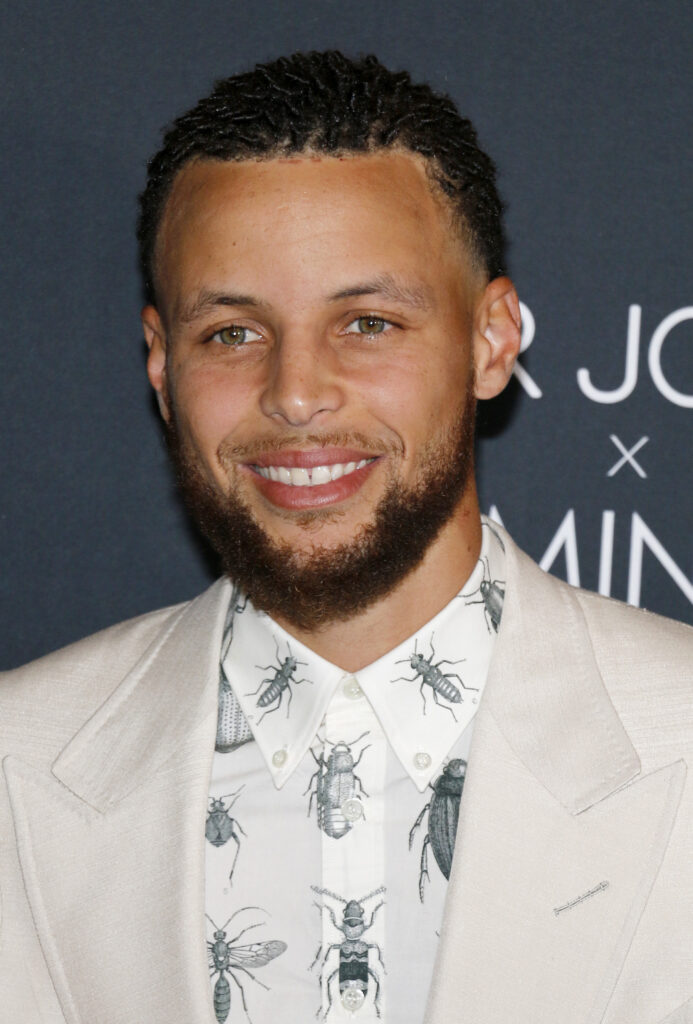
Sports fans and sneaker heads were caught off-guard last week when Steph Curry and Under Armour announced the mutual end of their thirteen-year partnership. The announcement dissolves a relationship that had once defined player and brand. Curry’s rise from underdog talent to surefire Hall of Famer occurred in conjunction with Under Armour’s trajectory as the underdog brand attempting to disrupt the Nike-Adidas duopoly. Not only does Steph Curry and Under Armour’s break-up mark a branding pivot for both, it features complex financial realities and legal strategies that will re-shape athlete branding.
Curry and Under Armour’s relationship began in 2013 when Nike infamously fumbled its renewal pitch, mispronouncing Curry’s name and failing to offer him the signature shoe he desired. Curry’s bet on Under Armour paid off big for both parties, helping shape him into a global icon and giving Under Armour legitimacy in basketball, a category where the brand previously struggled to gain a foothold.
Following the separation, which was effective immediately, Curry will maintain sole ownership of his Curry Brand, which was launched under the Under Armour umbrella in 2020. The Golden State Warriors superstar will now be a brand free agent, a decision allowing Curry to take the entire infrastructure of the Curry Brand to a new retail partner or pursue independent production. Under Armour will release the duo’s final shoe collaboration, the Curry 13, in stores in February 2026. Additional apparel collections will be released through October 2026.
Legally and contractually, the split is notable since it comes soon after a major extension. In 2023, Curry and Under Armour negotiated a long-term renewal that made Curry president of the Curry Brand and awarded him 8.8 million common shares of Under Armour stock, equity valued at nearly $75 million then. The agreement was widely viewed as a “lifetime” contract designed to replicate Nike’s legendary partnerships with Michael Jordan and LeBron James. The abrupt termination of the deal just two years later suggests a significant strategic divergence resolvable only by a mutual split.
The ”mutual decision” to part ways is a sanitized way of describing what effectively amounts to a complex corporate unwinding. Under Armour announced the split with their brand superstar alongside an expansion of a company-wide restructuring plan, an initiative adding $95 million in costs. These expenses explicitly include “the separation of the Curry Brand from Under Armour, further contract terminations, impairment charges and additional employee severance and benefits costs.” This language implies Under Armour was willing to incur significant one-time costs to dissolve Curry’s equity-laden 2023 contract extension.
The reasoning behind the massive split appears to be a story of divergent turnarounds. Under Armour is currently in a precarious financial position, as brand sales have fallen for eight consecutive quarters and their stock is down almost 50% on the year. CEO Kevin Plank has been trying to stabilize the ship by honing his focus on the “core UA brand.” While culturally significant, the Curry Brand generated $100–$120 million annually, a figure paling in comparison to the $5 billion-plus annually created by Nike’s Jordan Brand. For Under Armour, the Curry Brand may have been perceived as a low-margin, high-cost luxury that it could no longer afford to continue to scale. Plank himself suggested as much on a recent earnings call, as he seemingly questioned why a $5 billion company is unable to exploit its $100 million basketball category in a “bigger, better way.”
For Curry, it appears that the same “underdog” mentality that drew him to Under Armour may carry him toward his next brand strategy. In his statement on the break-up, Curry declared that he was “excited for a future that’s focused on aggressive growth.” For years, industry insiders have criticized Under Armour for failing to fully understand the generational talent they signed to their brand. Under Armour sold performance athletic equipment using Curry’s name and image, but could have sold more fashion-forward pieces as well. Throughout the partnership, Curry changed the game on the court, but his shoes rarely (if ever) dominated sneaker culture. The move will allow Curry to re-gain control in building a legacy brand outlasting his playing career.
The most significant legacy of Curry and Under Armour’s break-up will likely be how it re-shapes athlete branding. The legal strategy executed by Curry in entering into the partnership with Under Armour is one athletes and their counsel should mimic. As the parties go their separate ways, the most crucial detail is that Curry owns his brand. This puts the guard in stark contrast to other high-profile NBA superstars who have switched allegiances. For example, when Kawhi Leonard left Nike in favor of New Balance, Nike retained ownership ofr his “Klaw” logo. Similarly, when Kyrie Irving separated from Nike, he had to leave his popular signature logo behind when he moved to his new partnership with Anta. Curry, on the other hand, can take his entire brand identity with him. His team’s foresight in structuring his Under Armour deals so that the Curry Brand is a separate entity from Under Armour was the masterstroke allowing Curry to continue working to ensure the Curry Brand becomes a legacy brand.
Curry will now enter the market not just as an endorser, but as the owner of a proven and independent brand boasting a nine-figure revenue stream. The Warriors legend is arguably the most powerful sneaker free agent in sports history with seemingly limitless options at his fingertips. He could return to Nike, bringing his brand under Phil Knight’s historic and massive umbrella. However, it’s equally likely that Curry could continue his trend of unexpected moves, potentially partnering with another rising company or even constructing a fully independent model. For Under Armour, the split is an immense gamble. They have cut ties with the brand’s most authentic cultural icon, choosing financial discipline over their biggest star. While the decision may save them on the balance sheet, it might cost them relevance in the basketball marketplace.
Get the free weekly newsletter so you can win the game.